Jan 09, 2026
10 min read
A Tax-Free Cash Boost Without Selling Your Home: Canada’s Reverse Mortgage Explained
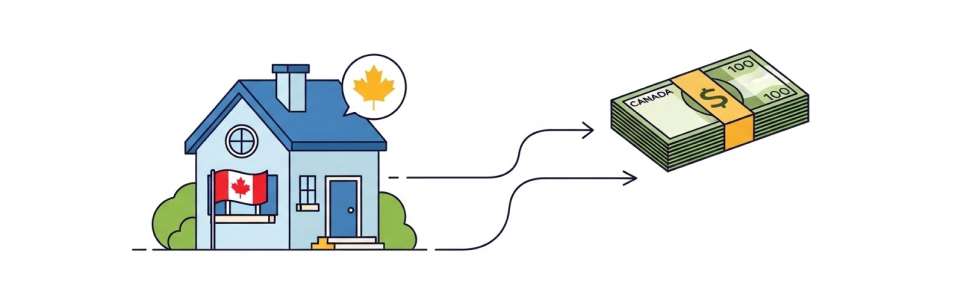
- Tax-friendly cash: You can convert part of your home equity into tax-free money
- Stay put: You keep your home and typically don’t make regular payments while you live there.
This topic keeps coming up in real family conversations — and there’s a lot of useful context worth knowing.
If you’re 55+ in Canada, it’s common to feel “asset rich, cash tight.” Your home may be worth a lot, but day-to-day costs don’t pause for retirement. A reverse mortgage is one way some homeowners turn a portion of that home value into spending power without selling or moving. (Канада)
Why it can be worth it (and what’s new to keep in mind right now)
You can usually borrow up to ~55% of your home’s value
Canada’s federal consumer guidance says you may usually borrow up to 55% of your home’s current value (exact amounts depend on age, appraisal, property details, and the lender). (Канада)
Yes, “up to $500,000” can be real — for some homes
That number isn’t a guaranteed offer; it depends on your home value and your borrowing limit. For example, 55% of a ~$900,000 home is ~$495,000. The key idea: big cash access is possible, but it’s math + eligibility, not a universal promise. (Канада)
You can receive funds in different ways — and that choice affects cost
You might take a lump sum, a partial lump sum with later advances, or regular payments. If you take everything at once, you’re paying interest on the full amount immediately; staged advances can come with extra fees or rate changes depending on the lender’s terms. (Канада)
The trade-off is cost: interest is usually higher, and the balance grows over time
FCAC notes reverse mortgage interest rates are typically higher than a traditional mortgage or HELOC, and interest is added to the loan balance — so what you owe generally increases over time. (Канада)
Repayment usually happens later — but the “later” is clearly defined
You generally repay when you sell, move out, or when the last borrower dies. You can often repay earlier, but there may be fees. (Канада)
There are responsibilities (and real consequences if they’re missed)
You typically must keep the home in good condition and stay current on property taxes and insurance. Default can lead to serious consequences, including foreclosure. (Канада)
Top providers in Canada (quick comparison)
| ServiceBest ForEst. PriceWebsite | |||
| CHIP Reverse Mortgage (HomeEquity Bank) | Wanting brand recognition and a long-standing Canadian reverse mortgage program | Rates/fees vary; interest generally higher than mortgage/HELOC; appraisal + legal + setup costs may apply | https://www.homeequitybank.ca |
| Equitable Bank Reverse Mortgage | Homeowners seeking higher potential borrowing limits in eligible urban areas | Rates/fees vary; interest accrues and is added to the balance; legal advice is part of the process | https://www.equitablebank.ca |
Prices are estimates and may vary. (Канада)
To stay grounded in today’s ranges and fine print, it helps to look at the broader information landscape — especially around fees and repayment terms.
Myths vs. reality
- Myth: “The bank takes your house.”
- Reality: You generally remain the owner; the loan is secured against your home’s value. (Канада)
- Myth: “It’s free money.”
- Reality: It’s still a loan. Interest is added over time, which can reduce how much equity is left later. (Канада)
Pros & cons (honest version)
✅ No regular payments required while you live in the home (in most cases) (Канада)
✅ Tax-free borrowing that typically doesn’t affect OAS/GIS (Канада)
✅ Flexible cash access (lump sum, staged, or payments) (Канада)
❌ Higher interest rates than many other options (mortgage/HELOC) (Канада)
❌ Debt grows over time, potentially reducing inheritance (Канада)
❌ Fees can add up (appraisal, legal, setup, possible prepayment penalties) (Канада)
FAQ
Q: Do I have to make monthly payments?
A: Typically, no regular payments are required while you live in the home, but interest is added to the balance. Some lenders may allow voluntary payments. (Канада)
Q: When does a reverse mortgage need to be repaid?
A: Usually when you sell the home, move out, or when the last borrower dies. Repaying earlier can involve fees depending on the contract. (Канада)
Q: Is it “safe” to use for retirement cash flow?
A: It can be, if it fits your goals and you understand the costs. FCAC recommends speaking with a financial advisor and discussing it with family because it can affect your home equity and estate. (Канада)
Bottom line
A reverse mortgage can be a practical tool when you want to stay in your home but need extra cash — especially if your income is fixed and your home equity is doing the heavy lifting. Just go in with eyes open: costs are real, the balance grows, and the terms matter as much as the headline number. (Канада)
Disclaimer
All content on croxy.io is provided for informational purposes only and does not constitute professional advice or recommendations. We do not guarantee the accuracy or completeness of the information; any actions based on it are taken at your own risk. croxy.io is not responsible for the content, services, or privacy policies of third-party resources linked from this site. By using this website, you agree to these terms. Learn more in our privacy policy.